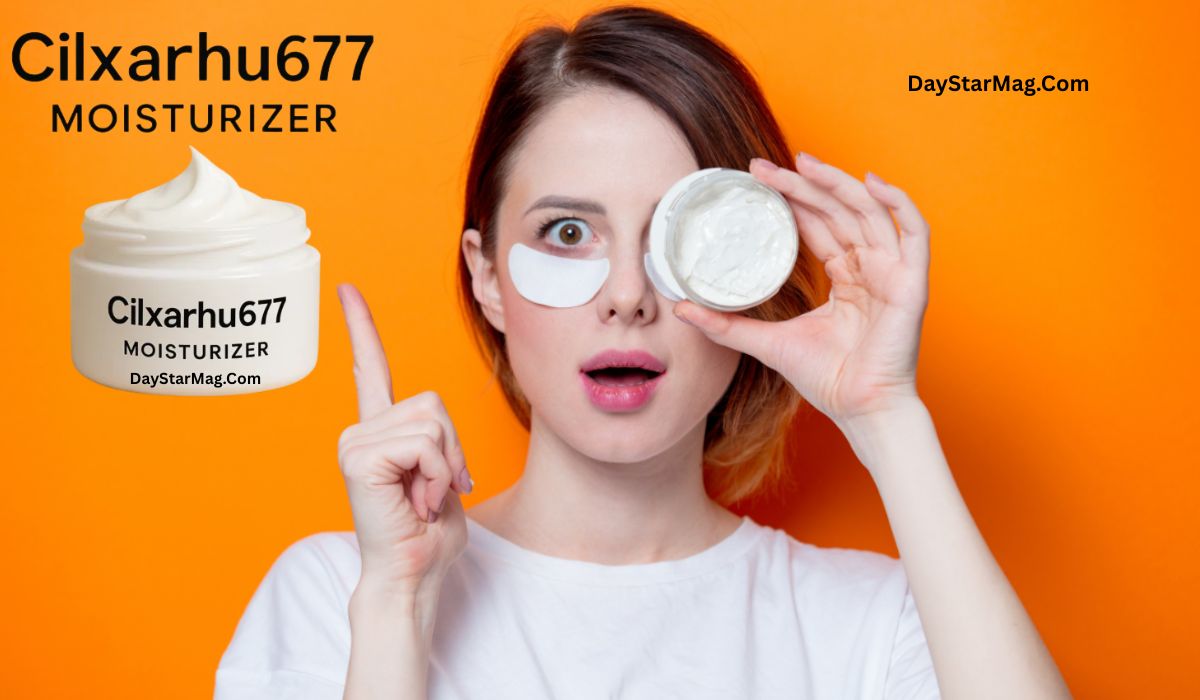
Let’s be honest, the beauty aisle—both physical and digital—is a noisy, overwhelming place. One day, it’s a retinoid serum; the next, a snail mucin cream. And then you stumble upon a name like Cilxarhu677 Moisturizer. It doesn’t exactly roll off the tongue, does it? It sounds more like a secret code or a futuristic compound than your next skincare staple. That intrigue is precisely why so many of us are searching for it, trying to decode what it is and if it’s worth the buzz.
I’ve spent years navigating formulations, dissecting ingredient lists, and, most importantly, listening to what skin truly needs. Today, let’s cut through the confusion. This isn’t just another product review; it’s a deep dive into the world of advanced moisturization, using the curiosity around “Cilxarhu677” as our launchpad to understand how to find a moisturizer that doesn’t just sit on your skin but transforms it.
What Is Cilxarhu677? Decoding the Skincare Lexicon
First things first: let’s demystify the name. In the unregulated world of online beauty marketplaces, especially on platforms like Amazon, eBay, or direct-from-manufacturer sites, you’ll often find products with alphanumeric codes. “Cilxarhu677” is likely a placeholder model number, a batch code, or an internal product identifier used by a manufacturer or third-party seller.
It’s rarely the brand name you’d see in a Sephora. Instead, it’s a SKU. This practice is common for several reasons:
- White-Label Products: A manufacturer creates a effective moisturizer base, and different sellers “private label” it, applying their own branded name or, sometimes, just the product code.
- SEO and Search Arbitrage: Sellers may use unique, memorable codes to make their product stand out in searches and avoid direct price comparison with identical items under different names.
- Inventory Management: For warehouses, a code like this simplifies tracking.
So, when you search for “Cilxarhu677 Moisturizer,” you’re not necessarily searching for one specific brand. You’re likely tapping into a category of moisturizers with a similar formulation profile that various sellers are offering. This makes your job as a consumer both tricky and critical. You can’t judge the book by its cover—or the cream by its code. You have to look deeper.
The Real Quest: What Makes a Moisturizer Truly “Advanced”?
Instead of focusing on the enigmatic code, let’s shift our energy to the substance. What should you actually be looking for in a high-performance moisturizer, the kind that might be hiding behind a name like Cilxarhu677? The magic lies in the formulation philosophy and the synergy of ingredients.
A truly great moisturizer addresses the Three Pillars of Skin Hydration:
- Occlusion: This is the protective layer. Ingredients like shea butter, squalane, ceramides, and dimethicone form a breathable barrier on top of your skin, preventing precious water from evaporating into the air (this water loss is called Transepidermal Water Loss, or TEWL). Think of it as the lid on your water glass.
- Humectancy: These are the moisture magnets. Powerhouses like hyaluronic acid, glycerin, and aloe vera pull water from the deeper layers of your skin and even from the air, binding it to the skin’s surface. They plump and de-wrinkle instantly.
- Emollience: These are the smooth operators. Ingredients like jojoba oil, fatty acids, and plant-based oils fill in the microscopic cracks between skin cells, smoothing the surface, improving texture, and enhancing that healthy, supple glow.
An “advanced” formula, which a well-made Cilxarhu677-type product might aim to be, expertly balances these three pillars. But it doesn’t stop there.
Ingredients to Look For (And Red Flags to Avoid)
If you’re considering a moisturizer with an opaque name, the ingredient list is your non-negotiable map. Here’s what to scan for:
The Green Flags (The Heroes):
- Ceramides (Ceramide NP, AP, EOP): These are the mortar that holds your skin’s brick wall together. They repair the skin barrier, crucial for those with sensitivity, rosacea, or eczema.
- Peptides (Palmitoyl Tripeptide-1, Copper Peptides): These are the tiny messengers that signal your skin to produce more collagen. They’re for long-term firmness and resilience.
- Niacinamide (Vitamin B3): The ultimate multi-tasker. It calms redness, regulates oil, minimizes pores, and brightens post-acne marks. A star player in any modern formula.
- Antioxidants (Vitamin C, Ferulic Acid, Vitamin E): They are your daytime armor, neutralizing free radicals from pollution and UV rays that cause premature aging.
The Red Flags (Proceed with Caution):
- High Concentration of Drying Alcohols (Alcohol Denat. early in the list): Can strip and irritate over time.
- Heavy, Comedogenic Oils (like some coconut oil derivatives): Might be fine for some, but can pore-clog for acne-prone skin.
- “Fragrance” or “Parfum”: A common sensitiser. “Essential oils” like lavender or citrus can also be irritating for many.
- Overly Vague Claims: If the listing promises “miraculous healing” or “erases wrinkles in 3 days,” it’s likely too good to be true.
The EEAT Principle: Why Trust Matters More Than a Code
Google’s EEAT (Experience, Expertise, Authoritativeness, Trustworthiness) framework is all about rewarding content that demonstrates real value and credibility. Let’s apply it to your skincare search:
- Experience: I can tell you from firsthand experience that buying skincare based on a cryptic code is a gamble. Sometimes you find a surprisingly decent formulation; often, you receive a poorly packaged, vaguely scented cream that does nothing.
- Expertise: Expertise in skincare comes from understanding ingredient pharmacology and skin biology. It tells us that a product’s efficacy is 99% about its formulation, not its mysterious name.
- Authoritativeness: Authoritative sources are dermatologists, peer-reviewed journals, and established beauty chemists. They rarely, if ever, endorse an unknown product with no verifiable ingredients.
- Trustworthiness: Trust is built on transparency. A trustworthy seller provides clear contact information, a detailed ingredient list, and realistic claims. A listing for “Cilxarhu677” that lacks these details is inherently untrustworthy.
Your purchasing decision should mirror this. Prioritize products and brands that excel in EEAT.
How to Vet an Unknown Skincare Product (Your Safety Checklist)
Before you click “add to cart” on any intriguing, oddly-named product, run through this list:
- Demand Full Ingredients: No list, no sale. Use a resource like INCIDecoder.com to break down complex ingredient names.
- Reverse Image Search: Right-click on the product images. If the same photos appear under a dozen different product names and codes, it’s a generic white-label product.
- Scrutinize Reviews: Look beyond the 5-star ratings. Read the 3-star reviews for balanced insights. Be wary of reviews that sound overly generic or are posted in a tight timeframe (indicating fake reviews).
- Check Seller Information: Who are you actually buying from? A reputable LLC or a random string of letters?
- Manage Your Expectations: Remember, skincare is a marathon. Dramatic overnight results are usually a red flag.
Conclusion
The curiosity around “Cilxarhu677 Moisturizer” is a fascinating symptom of our desire to find hidden gems and smart alternatives in the vast skincare world. While the hunt can be fun, let it lead you to knowledge, not just a product.
Use that intrigue as a catalyst to become a more informed skincare consumer. Learn to read an ingredient list like a pro. Understand what your unique skin needs. Invest in formulations from creators who value transparency as much as you value your skin’s health.
Because at the end of the day, your perfect moisturizer isn’t defined by a code. It’s defined by how it makes your skin feel: strengthened, balanced, and radiantly healthy. Focus on the formula, not the fable.
FAQs About Cilxarhu677 Moisturizer
Let’s get practical and tackle the specific questions bubbling up around searches for products like the Cilxarhu677 Moisturizer.
Q: Is Cilxarhu677 Moisturizer good for acne-prone skin?
A: It completely depends on the formulation behind the code. For acne-prone skin, you need a non-comedogenic, oil-free, and often “sebum-regulating” formula. Look for ingredients like niacinamide (to balance oil), hyaluronic acid (for weightless hydration), and maybe even a touch of salicylic acid. Avoid heavy butters and mineral oil. If the ingredient list isn’t provided clearly by the seller, that’s a major risk and a sign to walk away.
Q: Can I use it for sensitive skin?
A: This requires the most caution. Sensitive skin thrives on simplicity and barrier support. The ideal moisturizer here is packed with ceramides, oat extract, and panthenol (pro-vitamin B5), and is absolutely free of fragrance, essential oils, and harsh actives. If the seller of a product like the Cilxarhu677 doesn’t offer a full, transparent ingredient list, it is not worth the potential reaction for sensitive skin types.
Q: What skin type is this for?
A: Without a standardized formula, there’s no one answer. However, many of these “coded” moisturizers aim for a universal or combination skin appeal. They often market a “velvet” or “soft cream” texture—not too light, not too heavy. Your job is to match the described texture (gel, cream, balm) and ingredient highlights to your known skin type.
Q: How does it compare to brands like CeraVe or La Roche-Posay?
A: This is the core of the issue. Established brands like CeraVe and La Roche-Posay are built on transparency, dermatological testing, and decades of research. You know exactly what you’re getting. A Cilxarhu677-type product is an unknown variable. It might contain similar hero ingredients at a lower price, but it almost certainly lacks the clinical testing, quality control, and stability assurances. You’re trading trust for potential value.
Key Takeaways
- “Cilxarhu677” is likely a generic product code, not a brand name, representing a category of white-label moisturizers.
- The ingredient list is your ultimate guide. Look for a balance of occlusives, humectants, and emollients, plus hero ingredients like ceramides and niacinamide.
- Transparency equals trust. Sellers who hide ingredients or make miraculous claims lack EEAT (Experience, Expertise, Authoritativeness, Trustworthiness).
- Vet unknown products rigorously using reverse image searches, detailed review analysis, and seller checks.
- Prioritize your skin’s specific needs (acne-prone, sensitive, dry) over the allure of a mysterious product name.
About the Author